
The SH Diana was loaded with all its stores in Cape Town. Now, this is not like most other cruises that stop at populated places on the way when the chef can send someone to the shop because they’ve run out of sugar. Our chef has had to prep for meals – three to five a day – for 107 passengers plus over one hundred crew for three weeks. That’s over 700 meals a day and thirteen thousand across the three-week voyage (if I have my maths right).
More than 800 bottles of wine (estimated consumption is 40 bottles per day) were brought aboard. Now that might not sound like much but they serve a full bar as well as beer, of course. They do a mean Aperol Spritz (which I tried in memory of my friend Jude on the anniversary of her death). They offer three types of bubbles including French. Baileys on the rocks is a favourite of my friend Karen after dinner. I prefer a Frangelico. They reckon on going through one bottle of each of the main spirits per day. So many of the 107 passengers must like a cocktail. The crew have a separate bar and mess, and their own drinks and food served there.
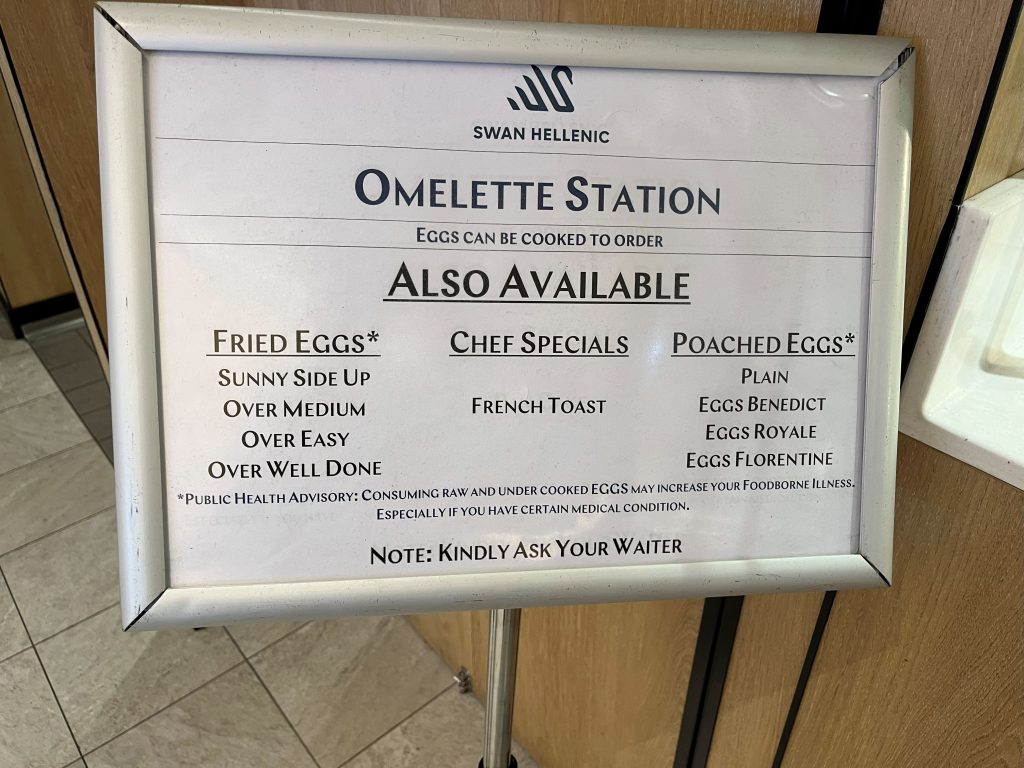
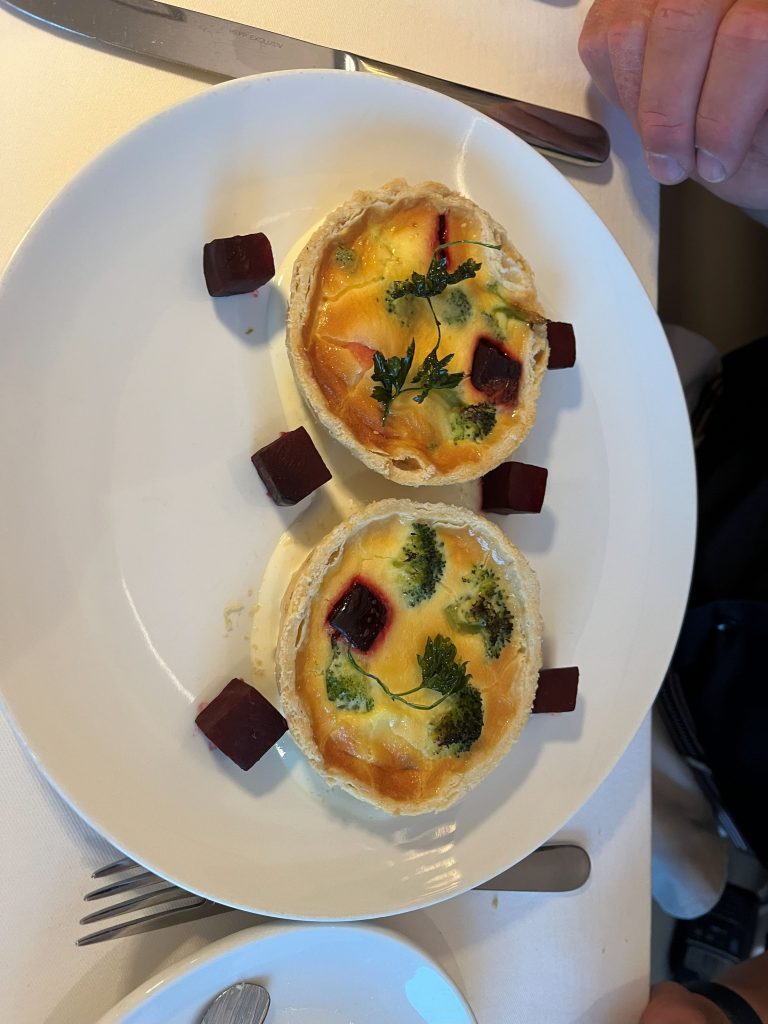
Eggs: they allows for 800 eggs per day. Not only for breakfast but for pastry and deserts too.
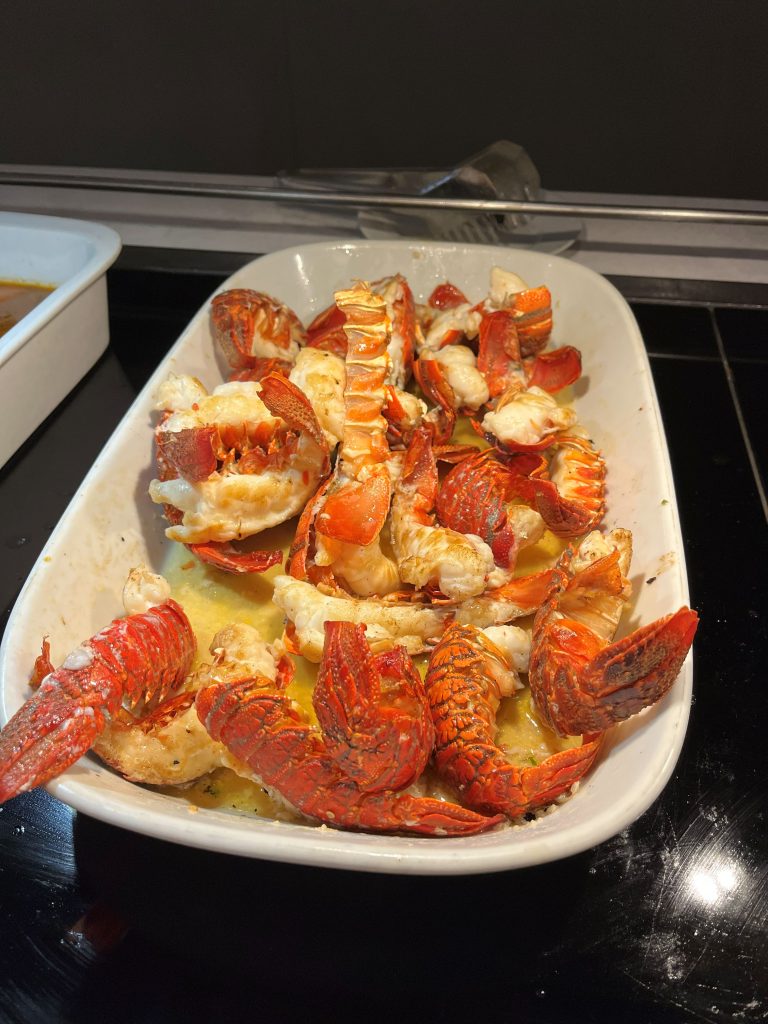
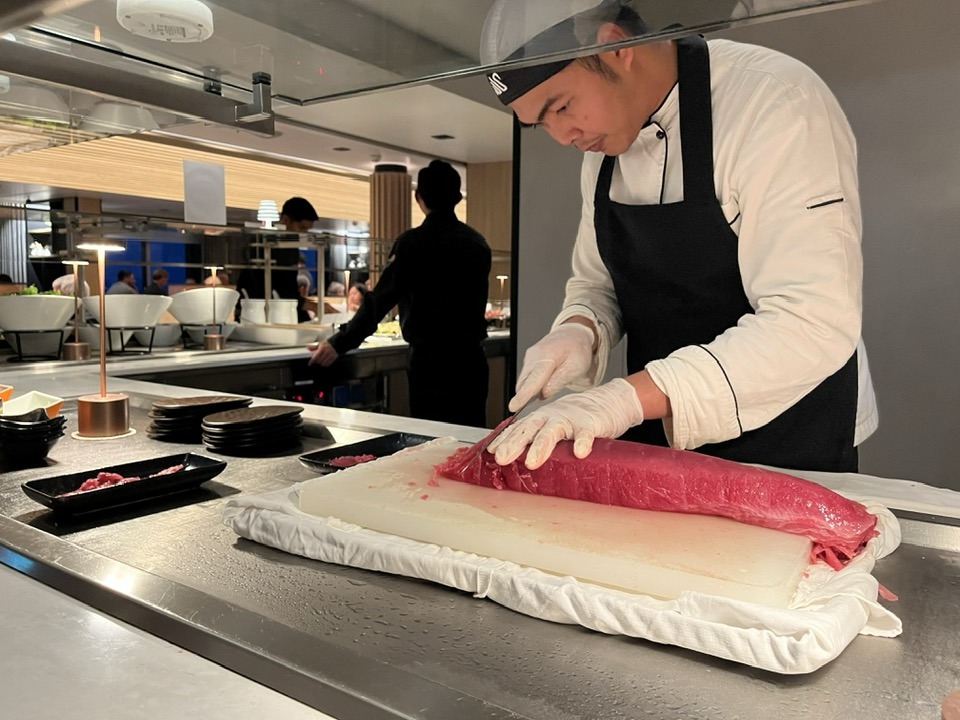
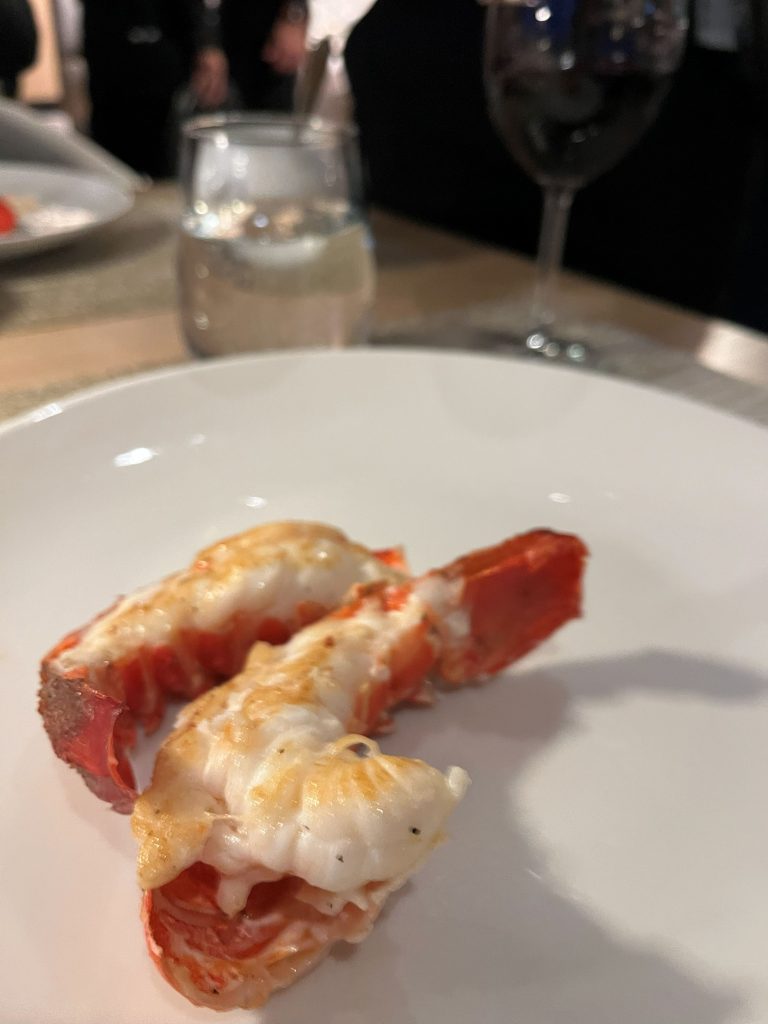
The craytails the chef bartered for at Tristan da Cunha came in four or five fish bins. That’s a lot of craytails. We got fresh tuna too. The ship traded wine, beer and dry goods for the seafood.
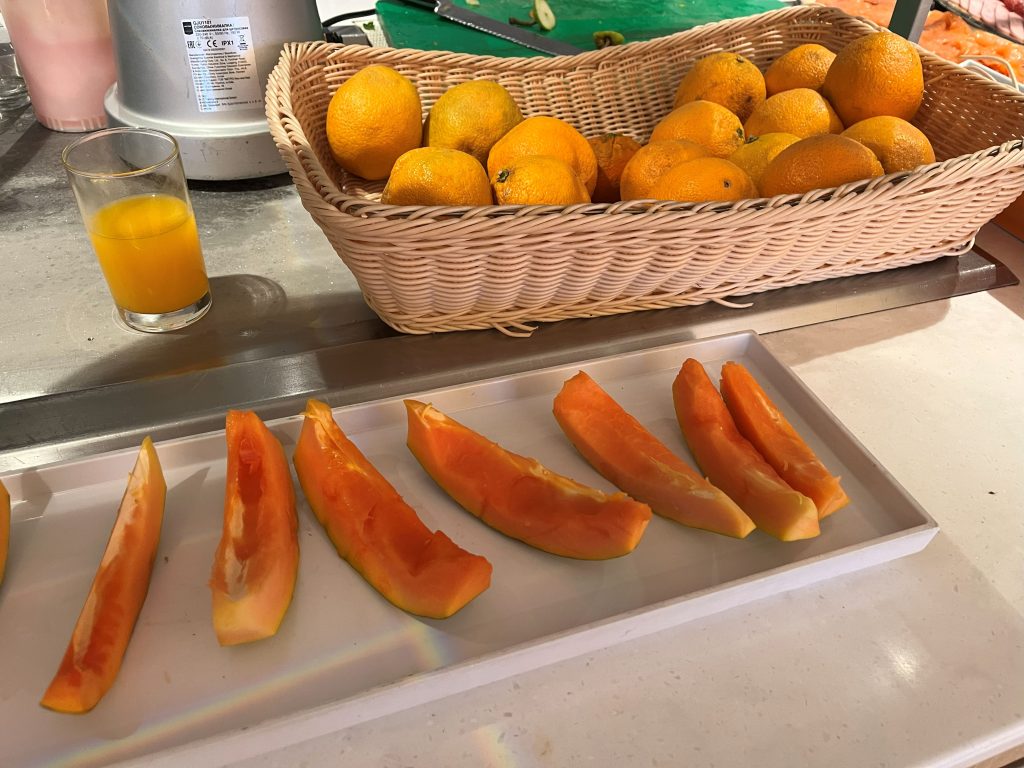
Eight hundred kilos of oranges will keep scurvy away for we intrepid sailors!
And watermelon 800kgs, canteloupe/rockmelon 400kgs.
Milk: 22 litres of milk is distributed all over the ship: kitchen, coffee station, to the bar’s coffee machine, the crew mess and the breakfast room. It’s only 22 litres a day because they also stock soy, oat and almond milk.
They have some well considered storage methods:
Lettuce: is left on the heart, and wrapped in damp paper.
Broccoli: is blanched and stored.
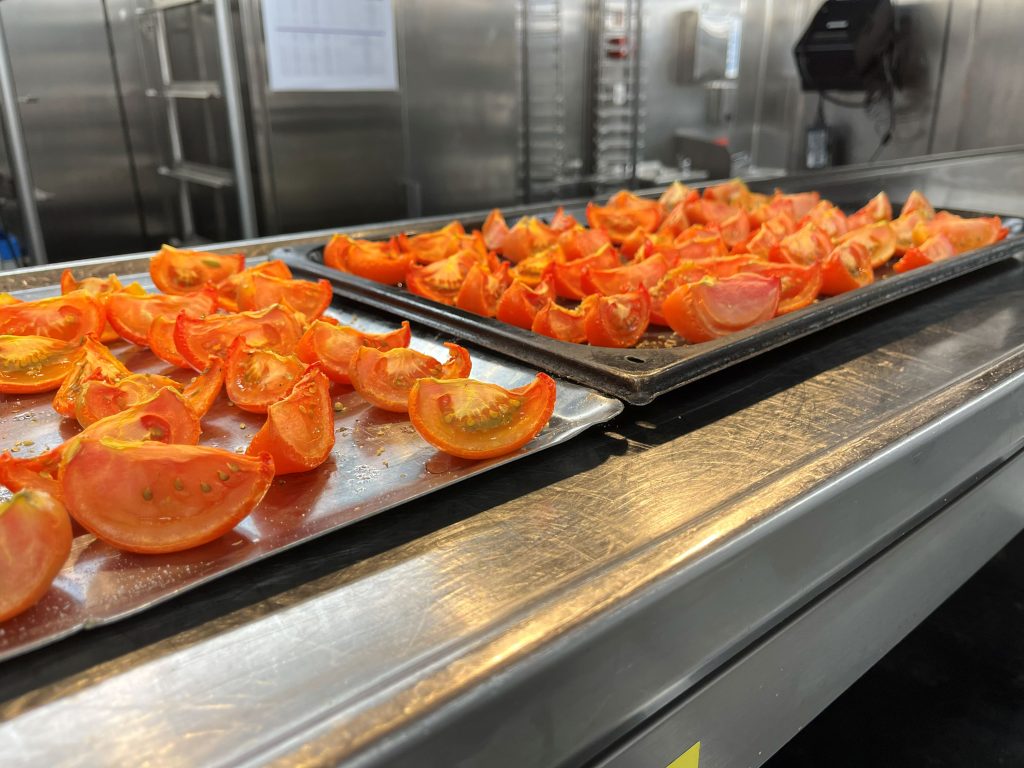
Tomatoes: are bought in varying degrees of ripeness to last the voyage.
Ice-cream: I had assumed would be made along the way but nope, it’s all loaded aboard at the departure port. There are at least five flavours of ice-cream and four of sorbet.
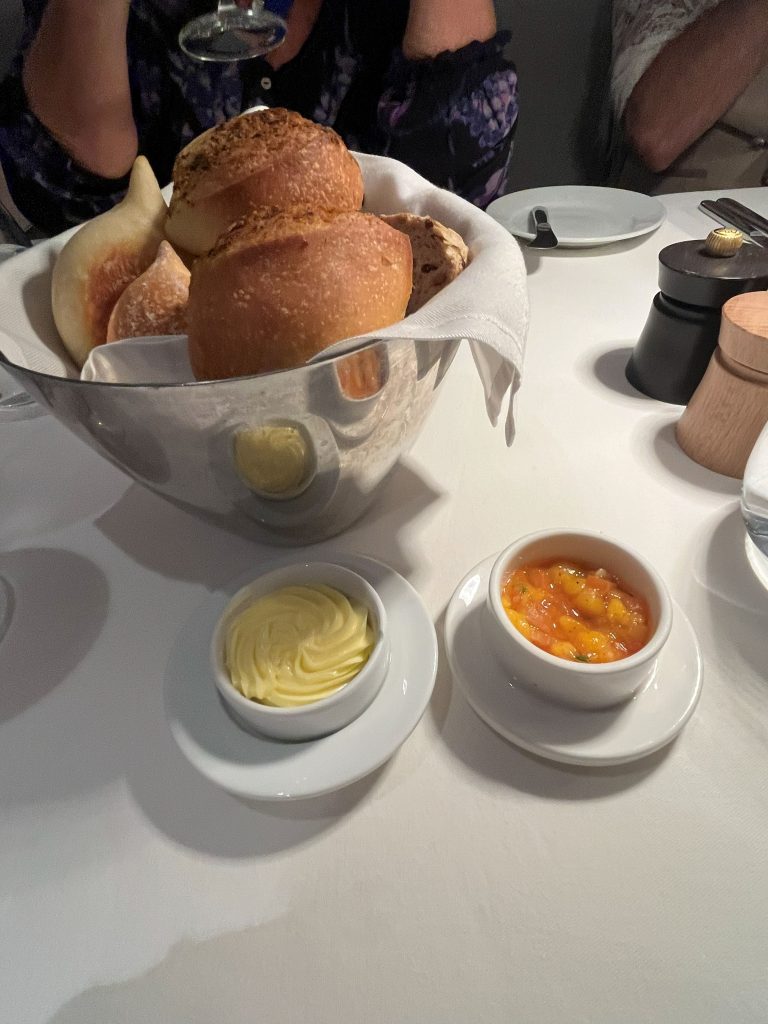
There’s a full time baker on board.
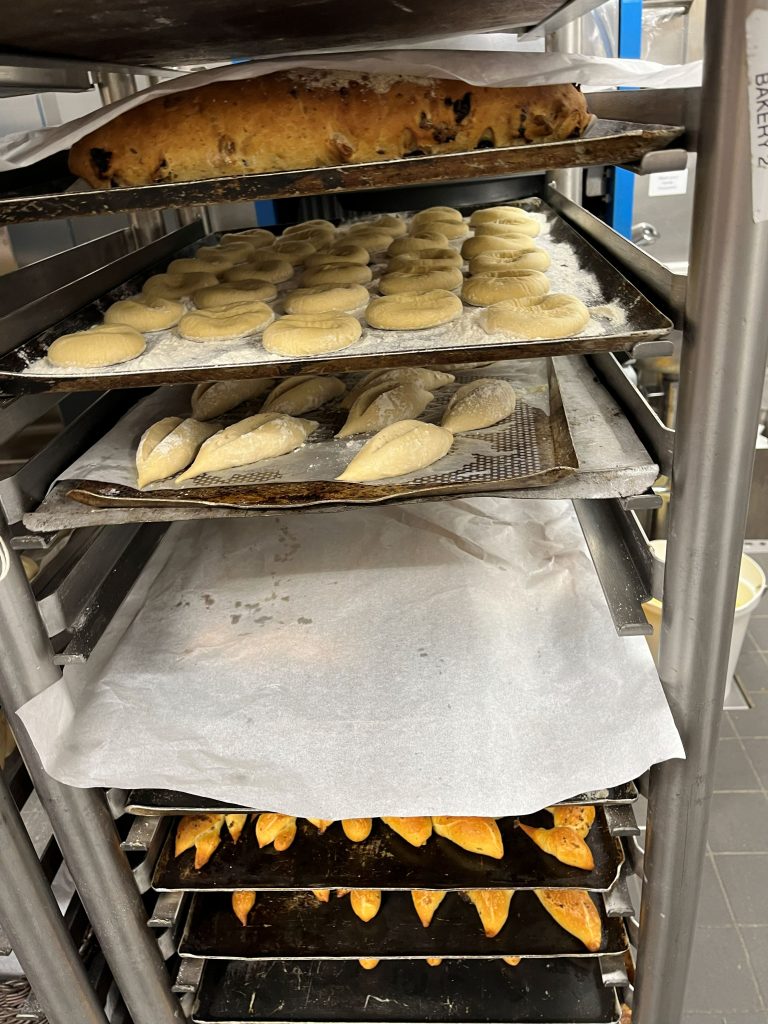
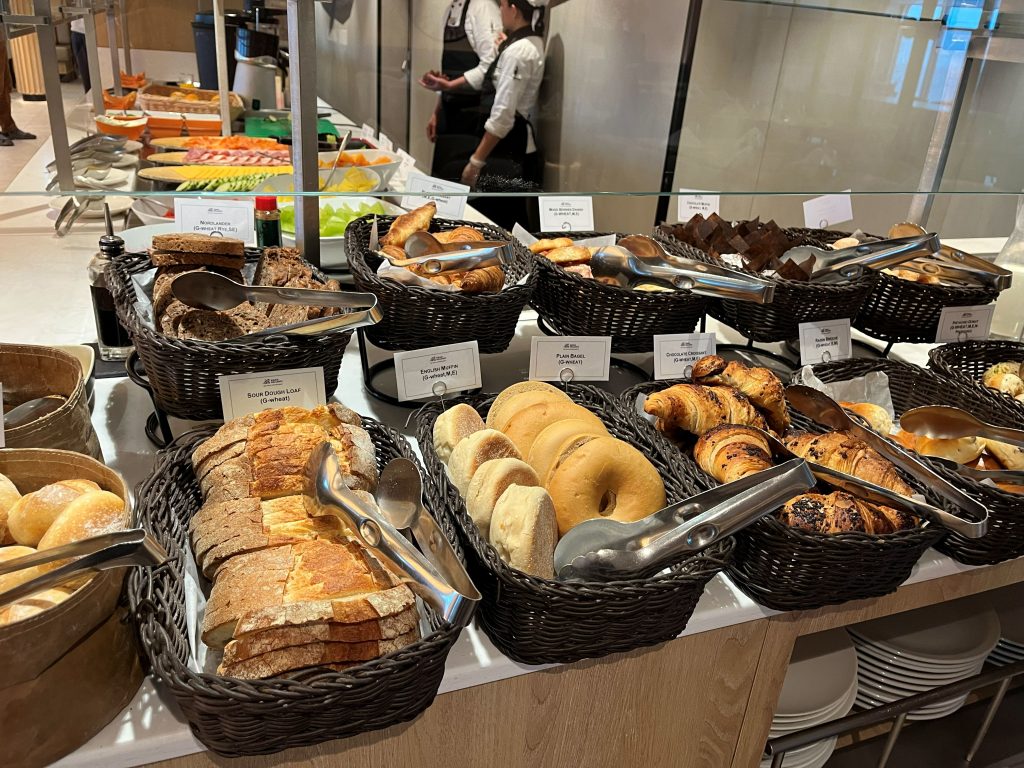
the Philippines
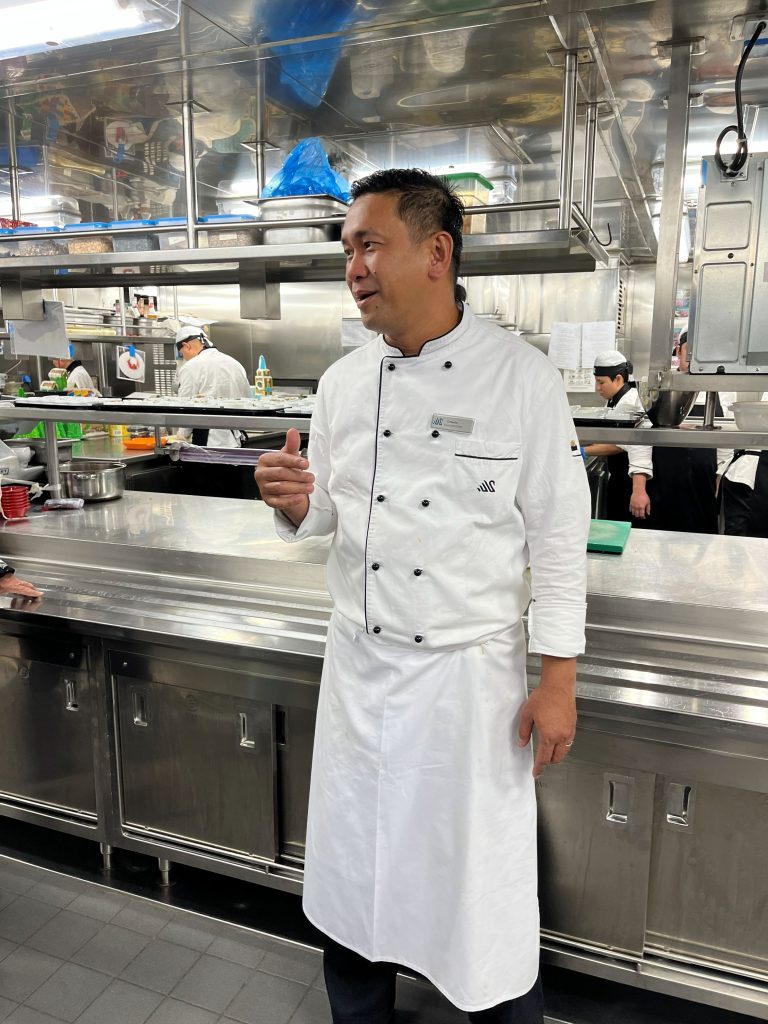
The head chef, Ernesto, is Filipino, as are 98% of his kitchen staff. This is the smallest ship he has worked on.
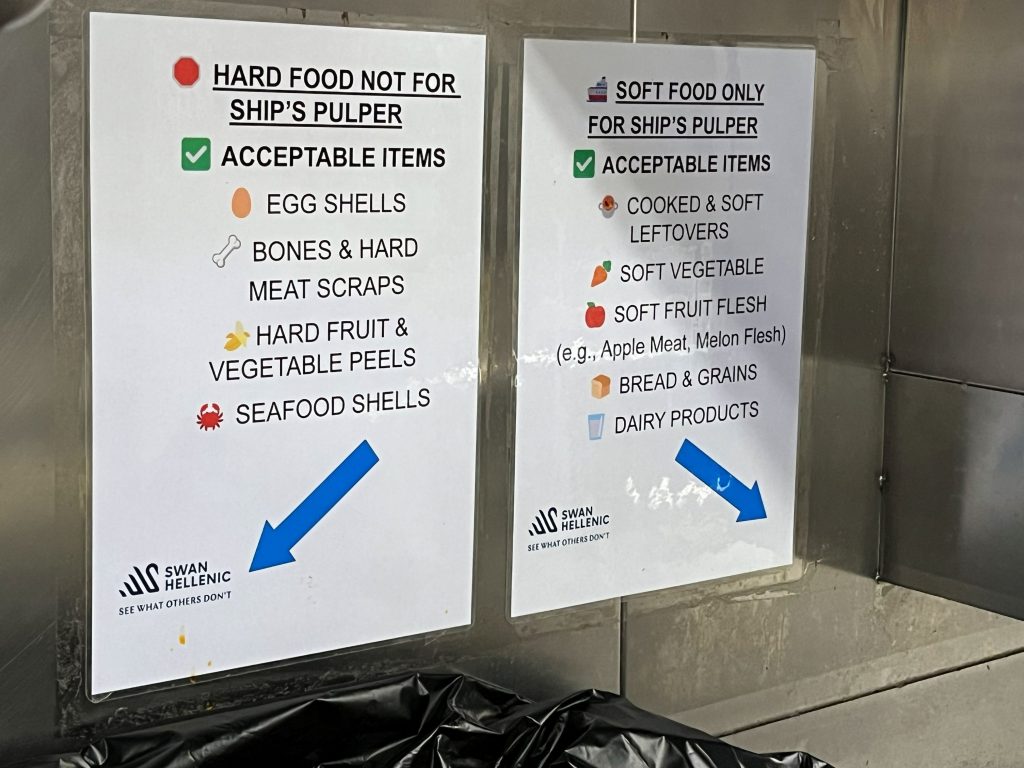
The kitchen separates food according to what can be safely put out to sea (not near a shore) and what needs to go back to port for disposal.
The stores include two weeks of emergency rations. Just in case we get stuck in the ice.
For more of my posts, go to www.franbryson.com