

We went ashore at Grytviken, an old whaling station. It’s an open air museum now, with a couple of small indoor museums/history rooms, a post office and gift shop. The staff kindly stayed open late for us.
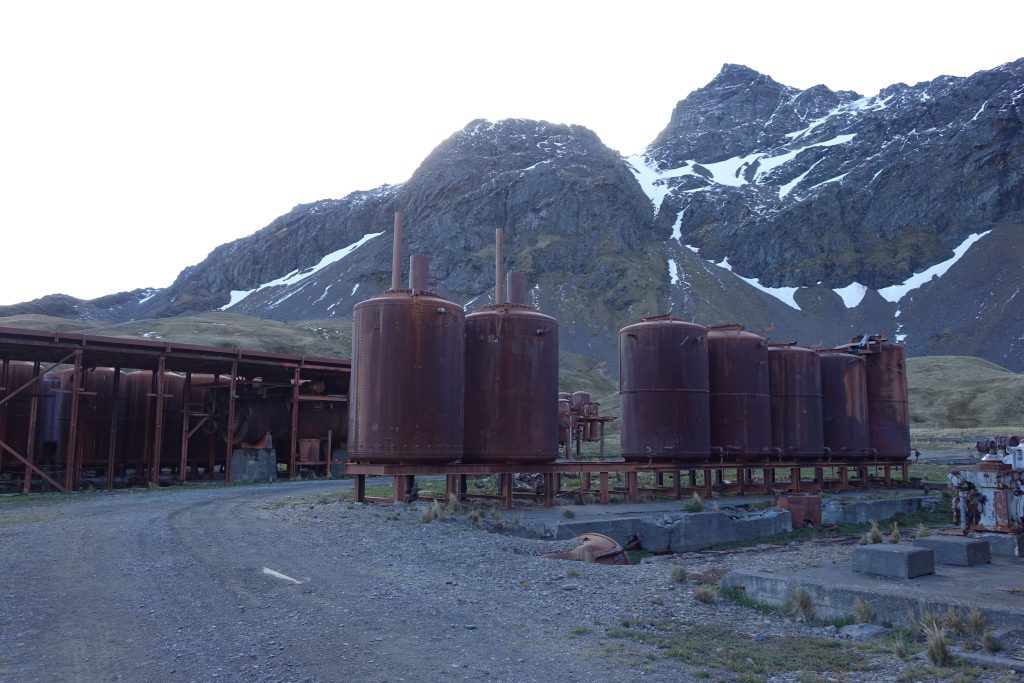
Oil was extracted from the dead whales by boiling the flesh in one of the twenty four pressure cookers that lie rusting on site. Each cooker held twenty four tonnes of blubber (!) and took five hours to cook.

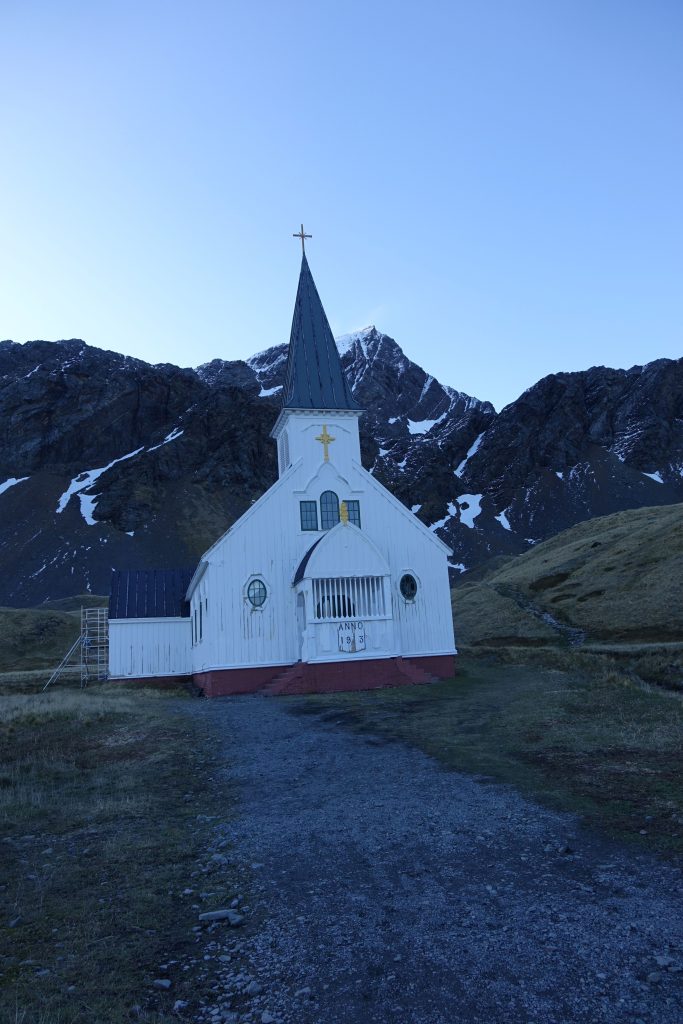
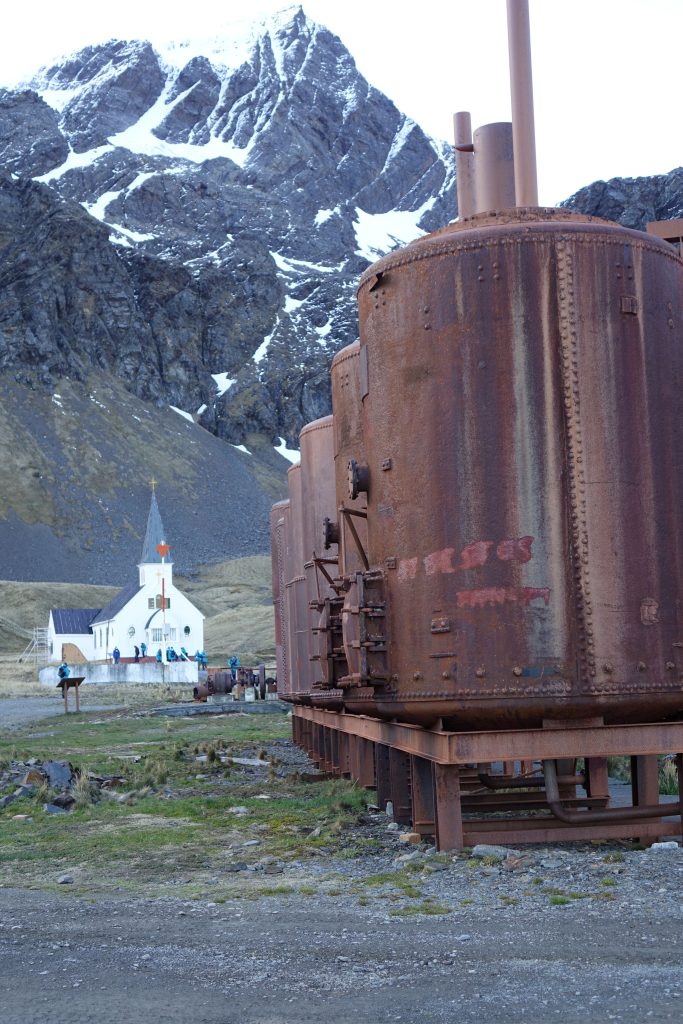
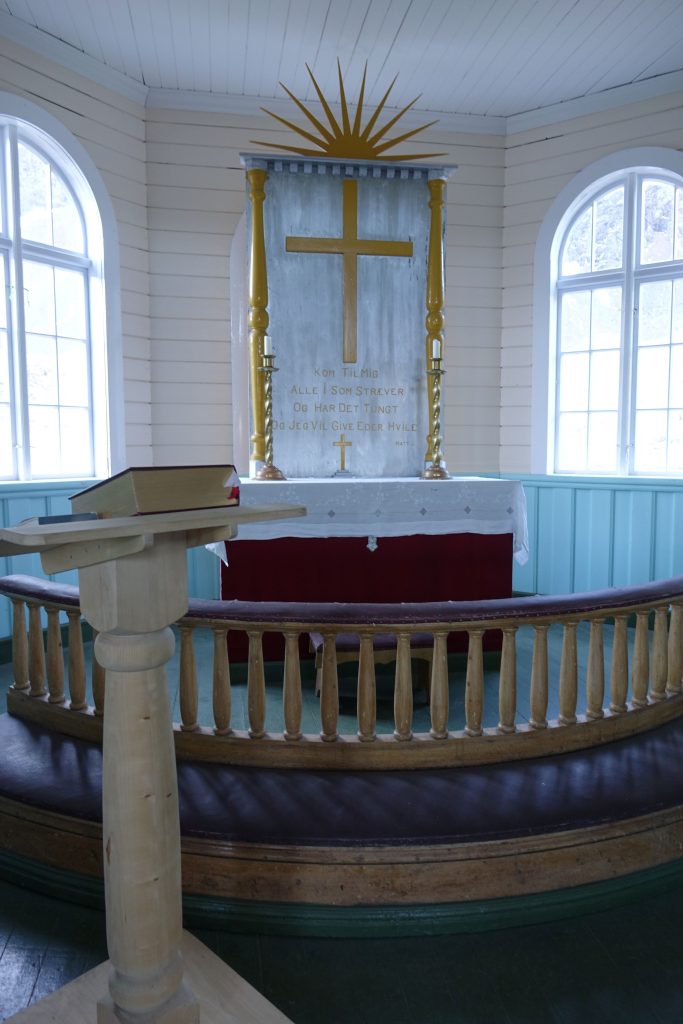
The whalers built this church in the Norwegian style (as many of them were) in 1913.
For two decades there was a resident pastor and a choir. Marriages, baptisms and funerals were held inside.
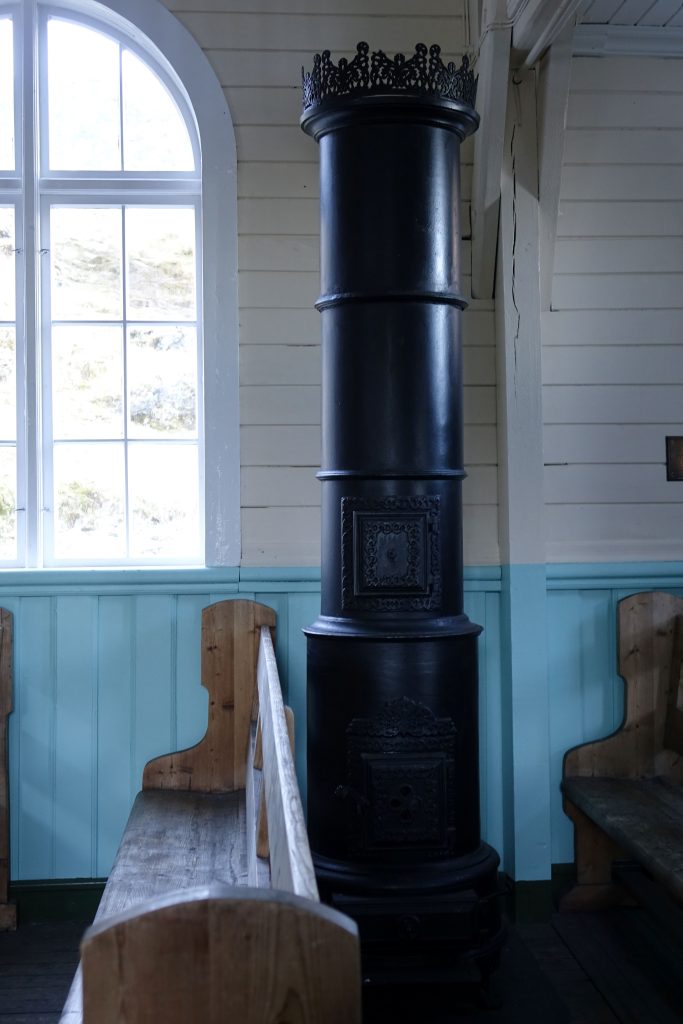
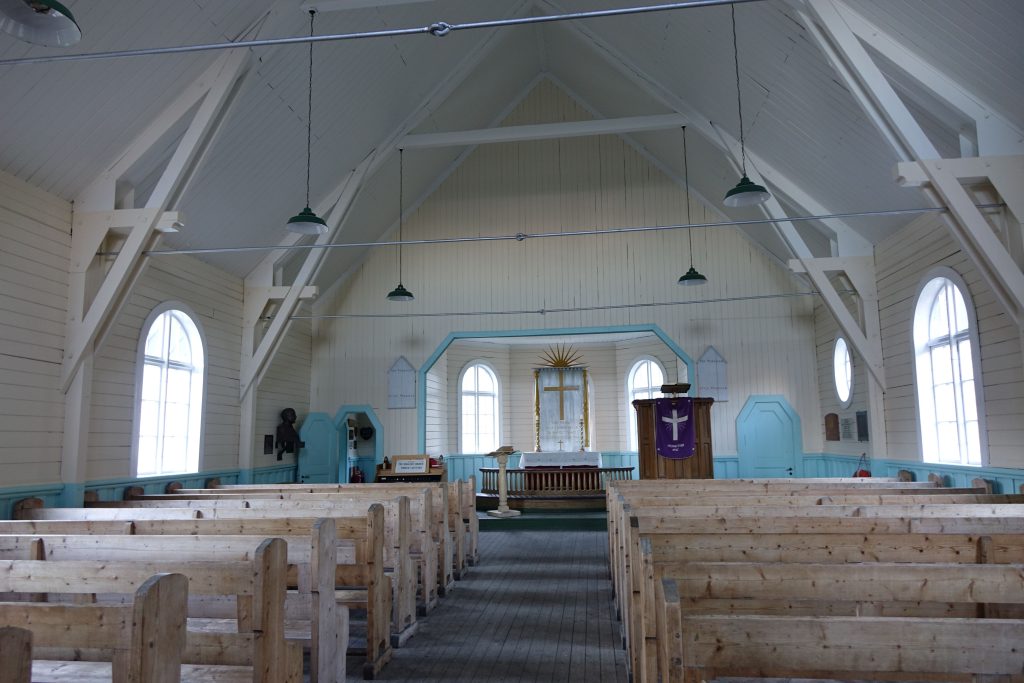
They’d have definitely needed a wood heater although there wasn’t a lot of wood to be seen.
There’s a library in the back room complete with a Dewey Decimal cataloguing system.

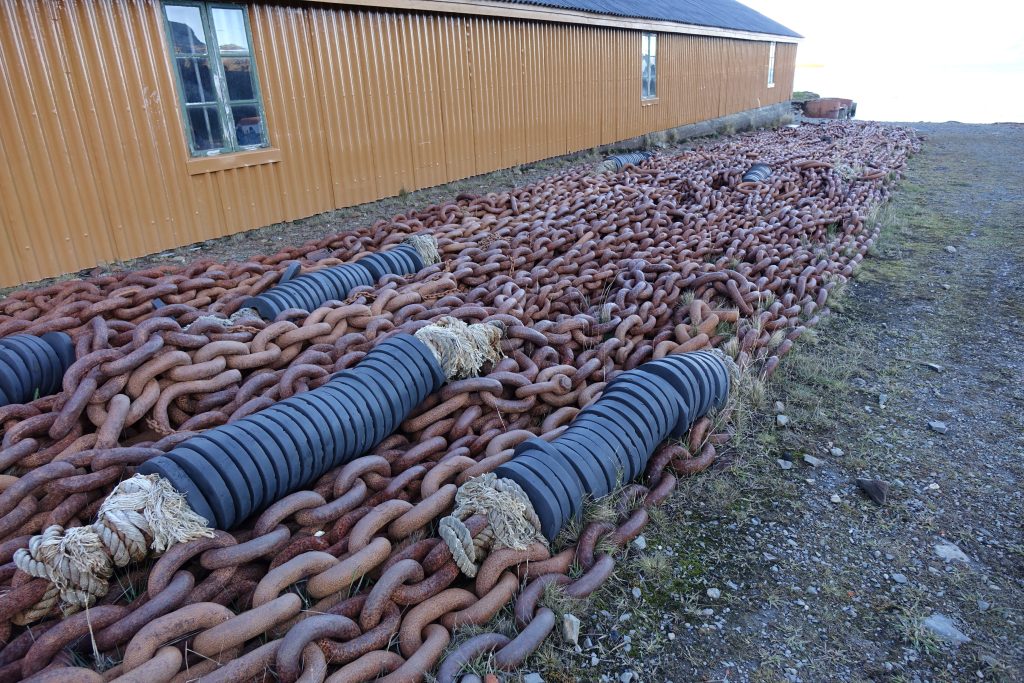
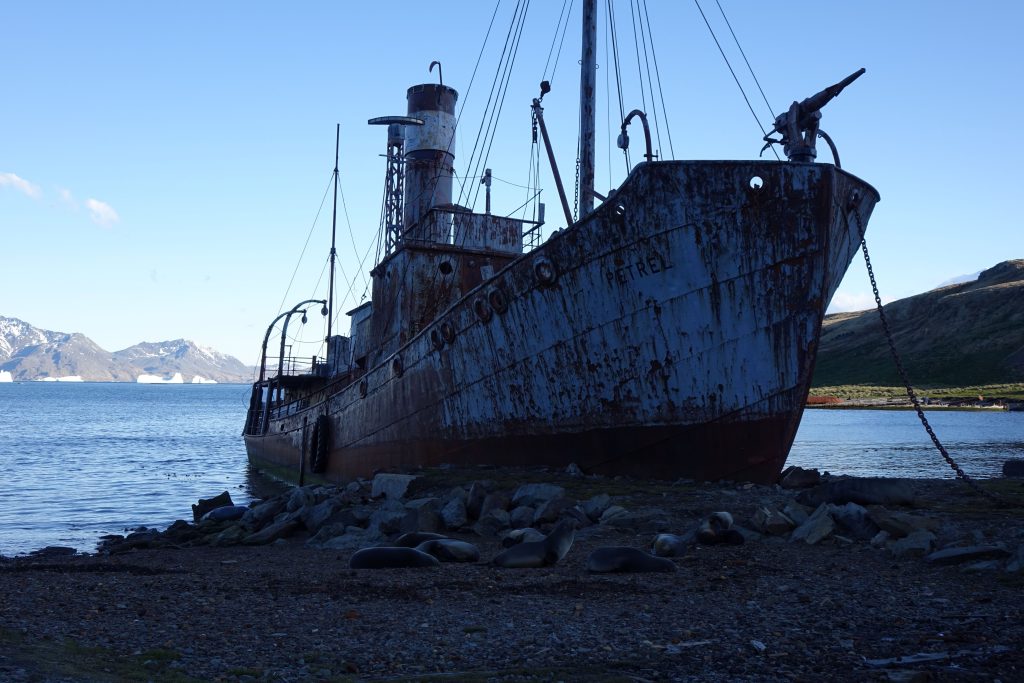
Lots of good exhibits in the open air museum.

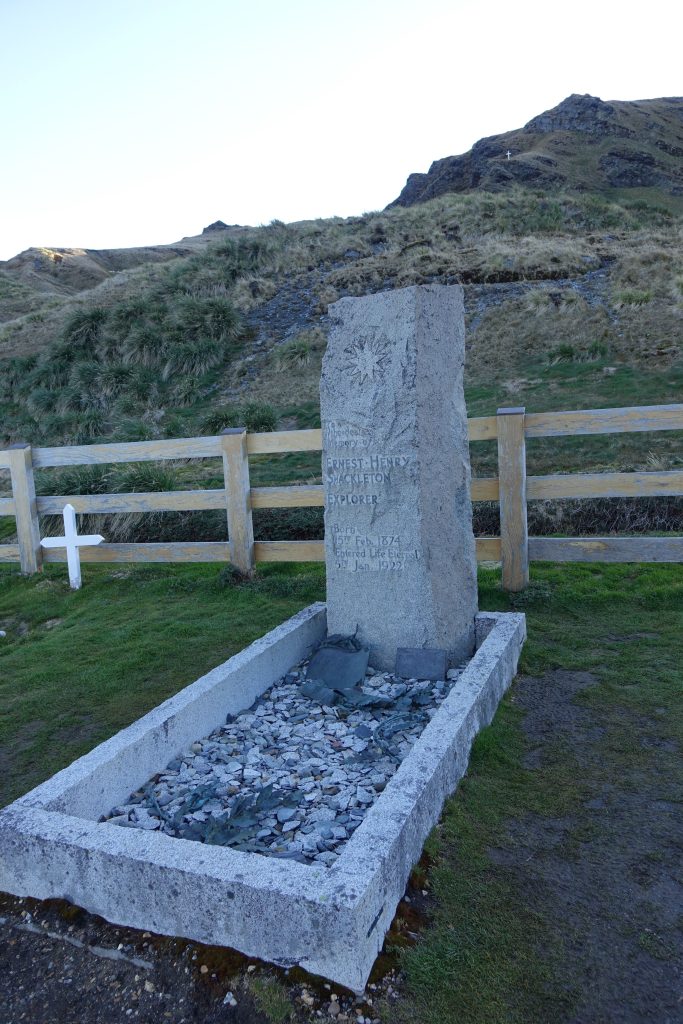
Here lies Ernest Shackleton who trying to reach the South Pole when his ship was caught in the ice. The expedition leader and his team endured the conditions, living on seal meat, penguins and their sled dogs, while floating on the pack ice for five months. Then they managed to make it to Elephant Island in the South Shetlands (where we are due to stop next). A small group sailed a small boat for sixteen days to South Georgia to raise the alarm and mount a rescue mission. All team members were eventually saved. Some years later, Shackleton died unexpectedly at Grytviken whaling station making his fourth attempt at reaching the South Pole.
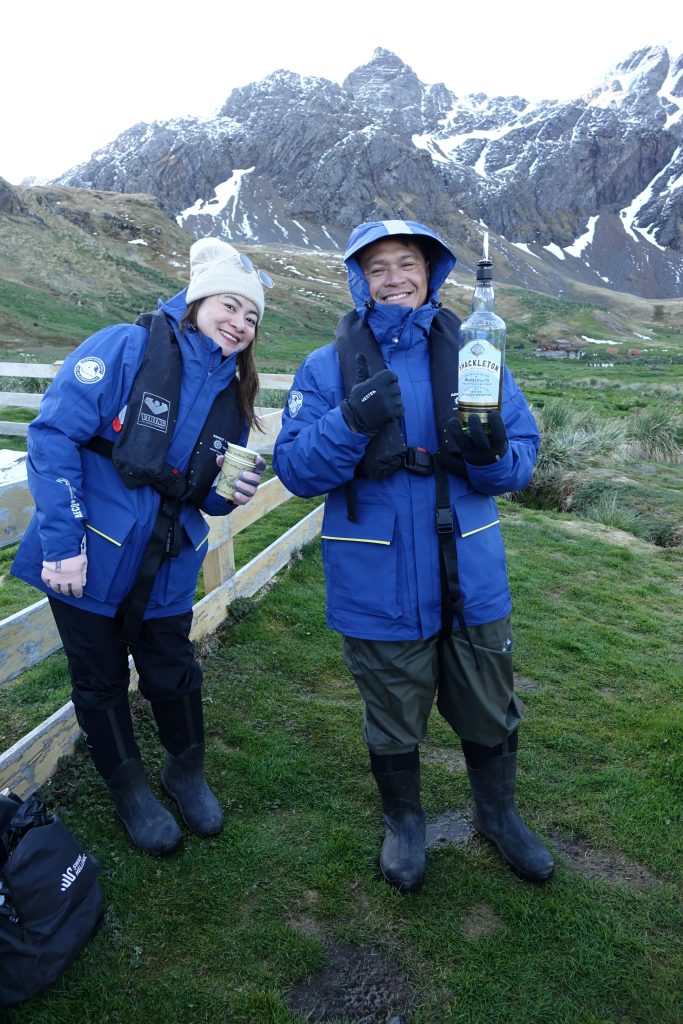
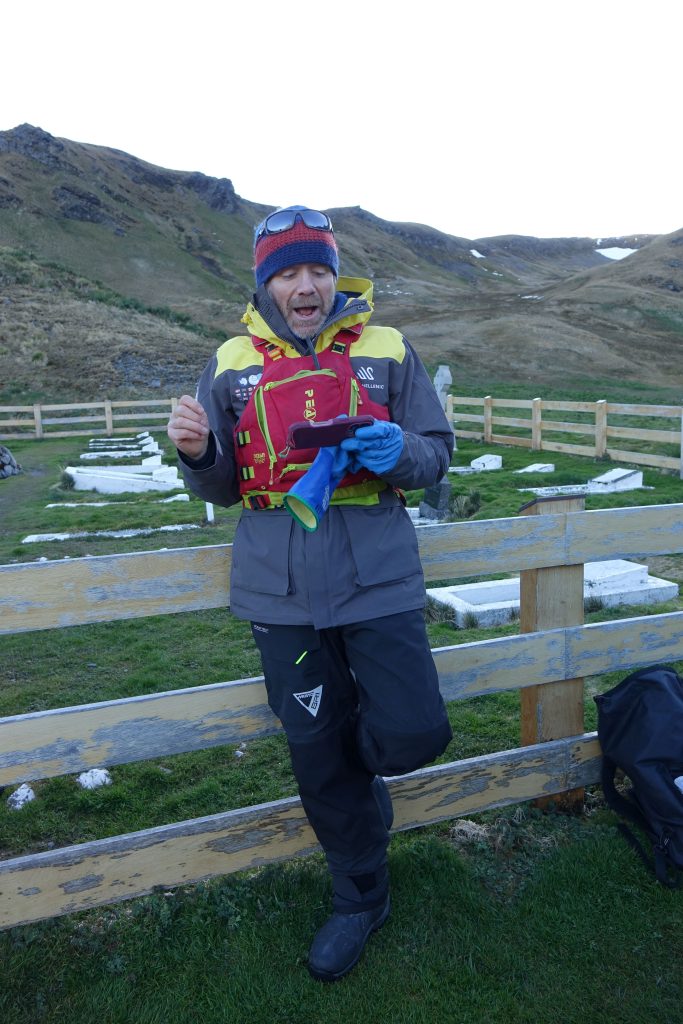
Hospitality team members Lyn and Francis offered us a Shackleton whisky to toast his grave while Ali reads some quotes about the explorer.
On South Georgia Island, there were up to 3000 introduced raindeer — well, a dozen were introduced, the rest bred — until about 2013 when they were finally eradicated. The seal are, of course, endemic and prolific.
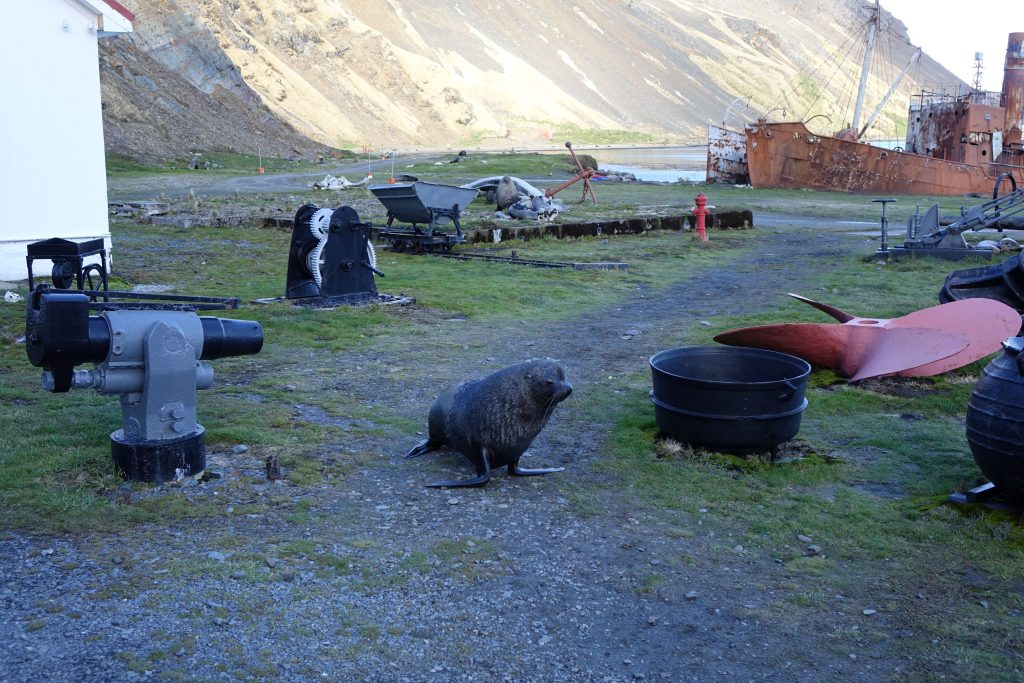
Contrast this happy fur seal (one of many we had to step around) with what used to lay on the ground here at Grytviken….uggh. Now we have two and a half days sailing to Antarctica.
