For my first post on Tristan da Cunha click here. For my second post on Tristan da Cunha click here.
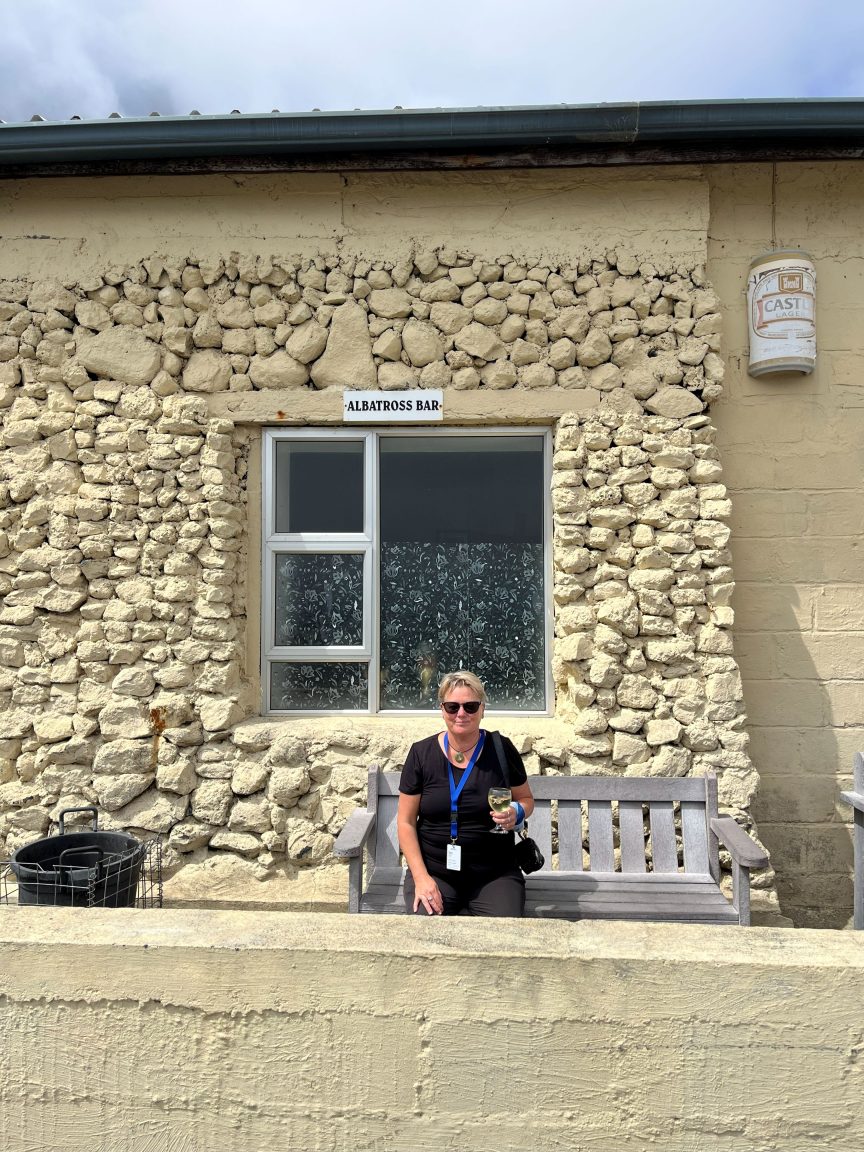
There is a bar on the remotest island, of course. It is called the Admiral’s bar and the drinks are astonishingly cheap. Must be a duty free region. A beer cost a couple of bucks and a glass of wine around the same.

Randall was running the bar when we visited. He has similar physical characteristics to many Tristinians. The Tristinians remind me of the people of St Helena, 2300 kms to the north. When I read that women had been brought to TdC from St Helena to be wives for Tristinian men, it made sense that their descendants would look similar.
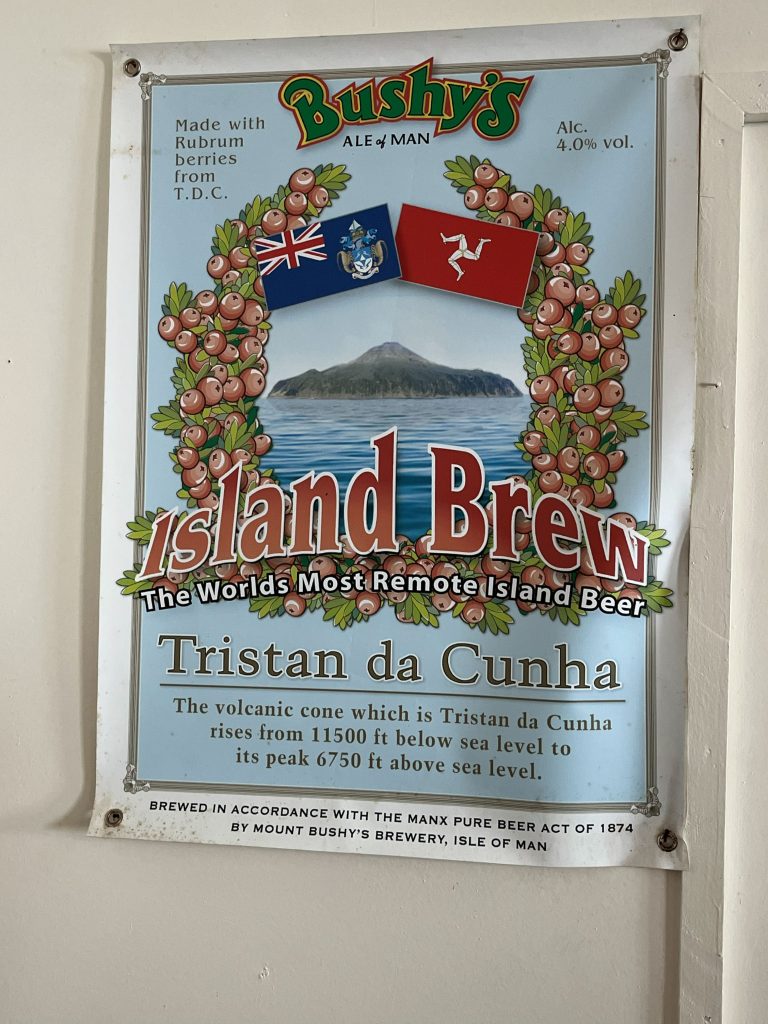
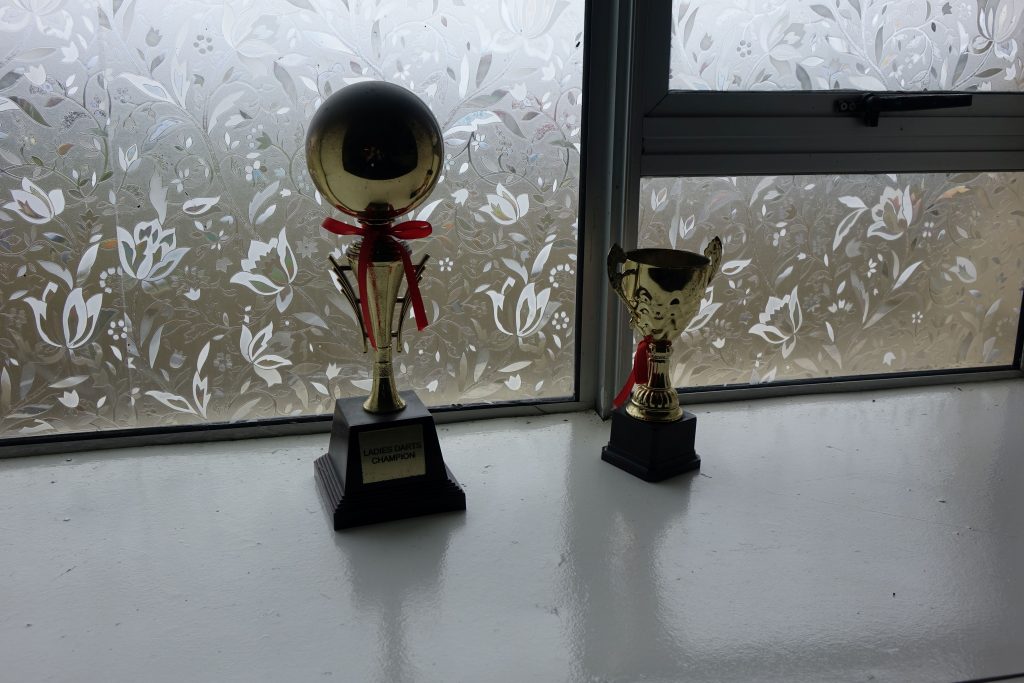
Sadly, they do not make beer on TdC any more. But they obviously did once. There are darts competitions for both men and women. I’m guessing, since the trophies don’t sport winners’ names, that it’s too difficult to send them off for engraving.
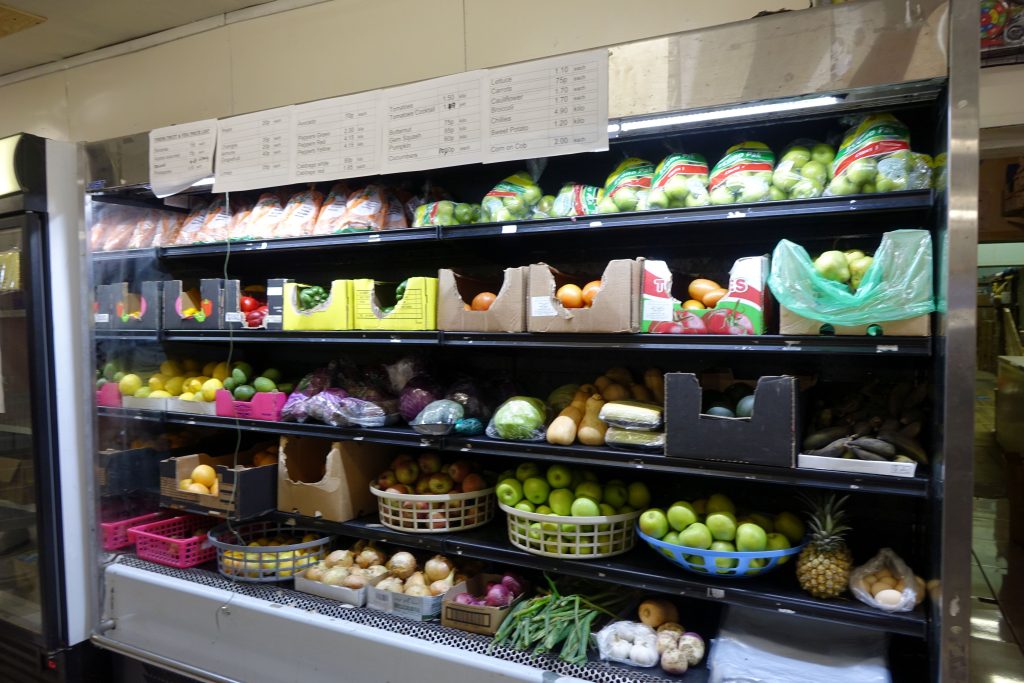

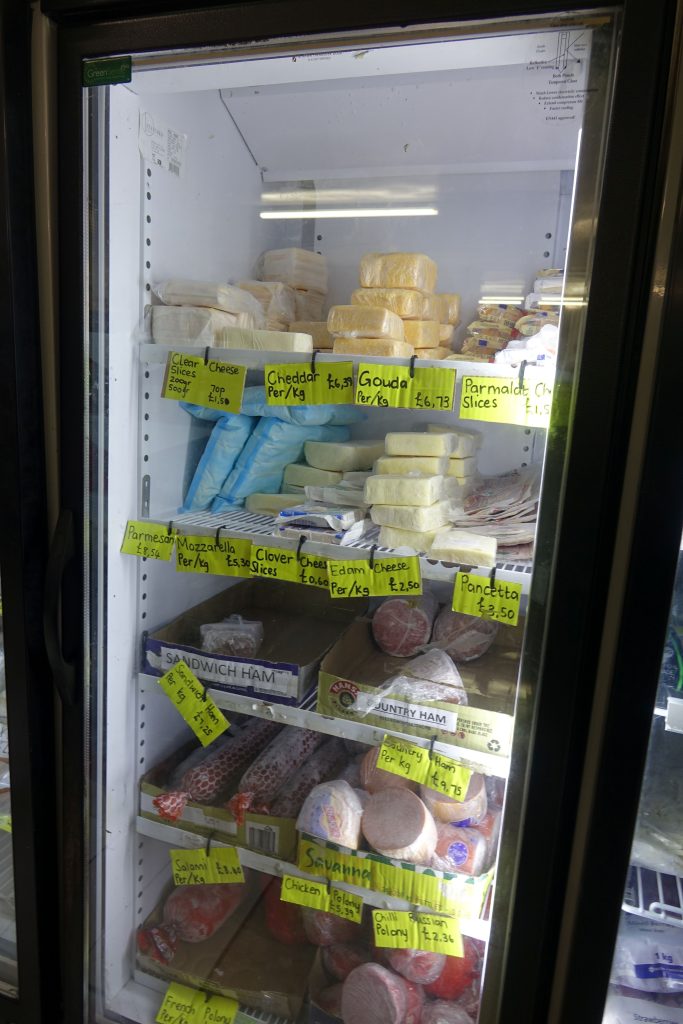
The supermarket was still pretty well stocked given there was a supply boat due in a couple of days. When I was on St Helena, the week before the supply boat was scheduled, there was little on the shelves. This was especially true for vegetables yet here on TdC, where the supply ship comes only every second month, the veggie shelves are full. Perhaps because there are two greenhouses operated by the Agriculture Department. There’s also plenty of cheese and salami in the freezer.
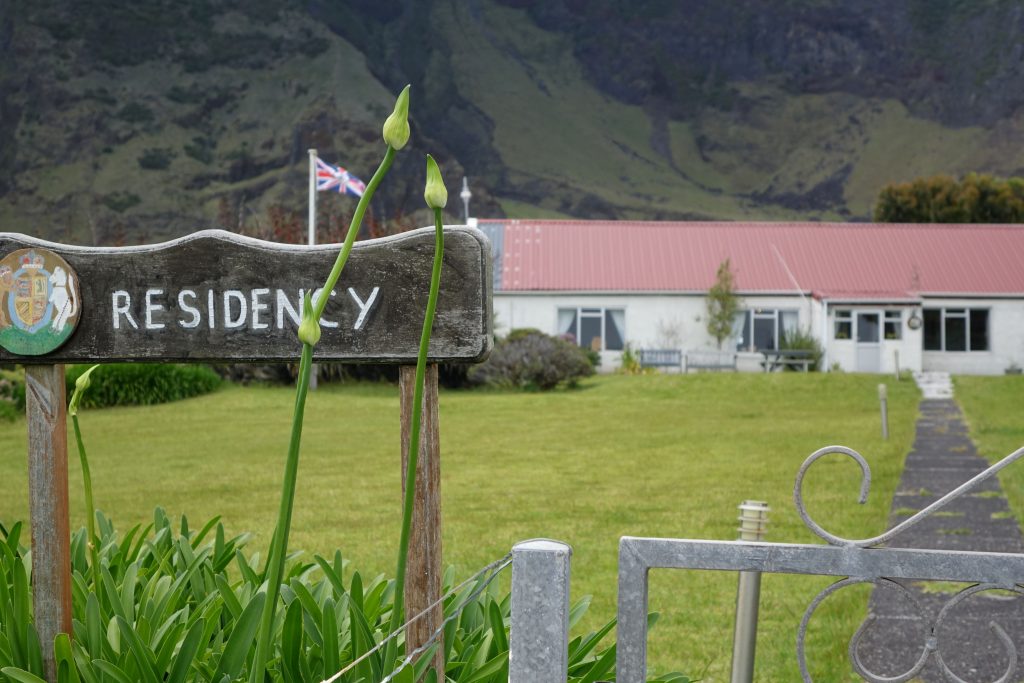
The Administrator, who is appointed by the British Dept for Foreign Affairs and, I think, is subordinate to the St Helena Governor. The only two storey building on the island is the Government office building known locally as ‘Whitehall’. Council meeting are also held there. ‘The Residency’ is where the Administrator is housed.
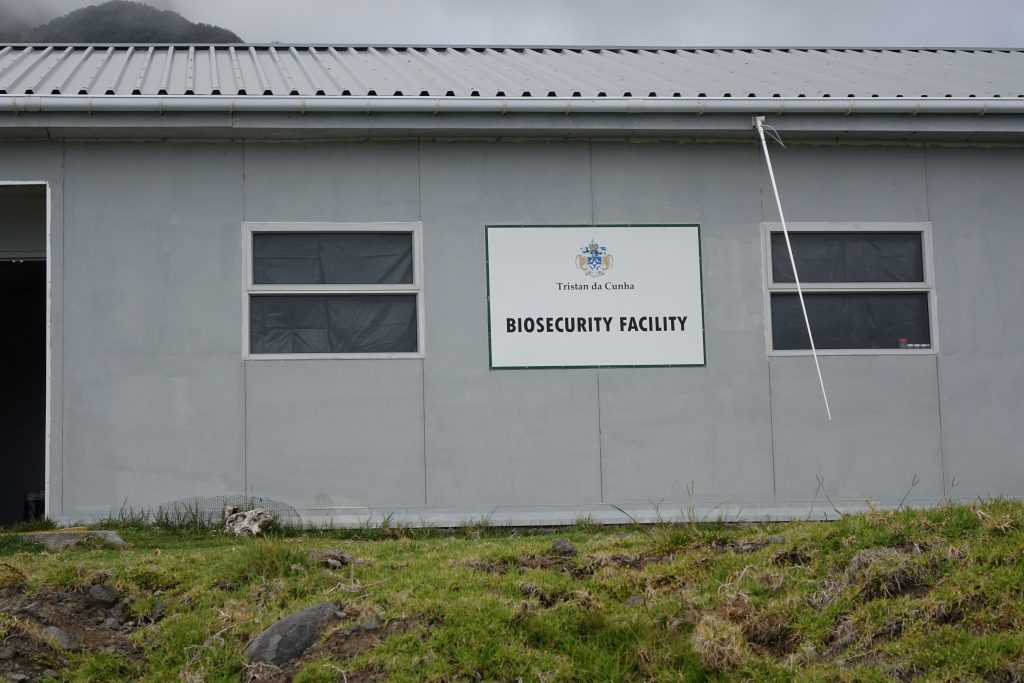
Biosecurity is especially important to islands. We have a biosecurity officer on Flinders who meets every plane that comes from the mainland. Recently there was a fruit fly outbreak and the biosecurity officer was suddenly very busy. On TdC they also take biosecurity seriously and we were asked not to take food ashore. I’m told there’s often an outbreak of illness on the island after a ship visits. I do hope we didn’t take anything nasty ashore and infected the locals.
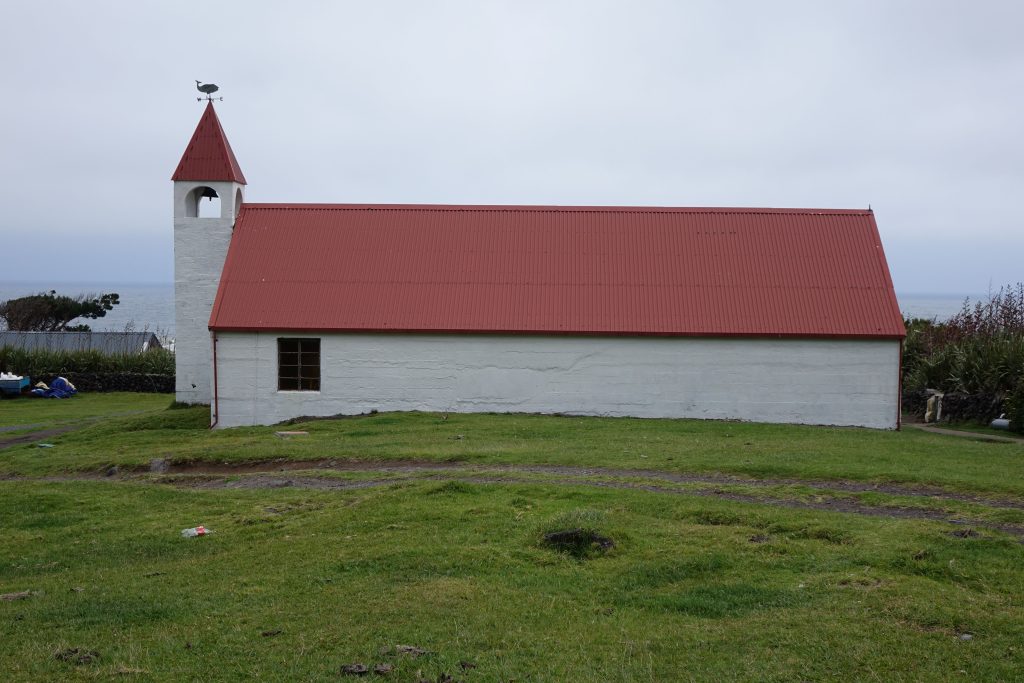
There are two churches: one Anglican and one Catholic. Everyone was Anglican until a Reverend was appointed to the island who was unnecessarily authoritarian so a bunch of Tristinians converted to Catholicism.
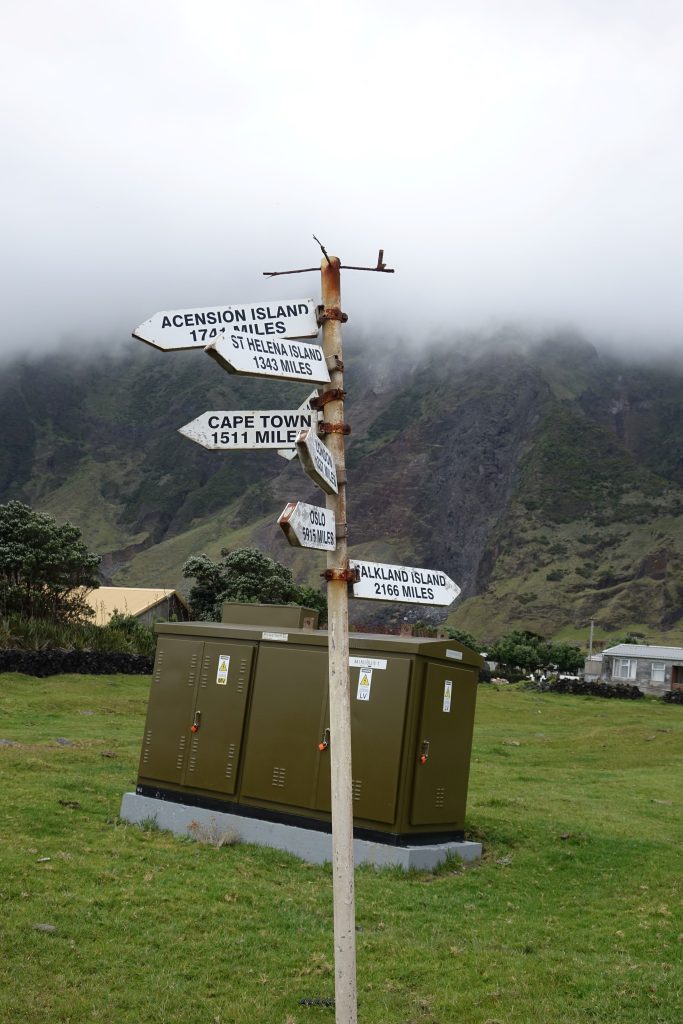
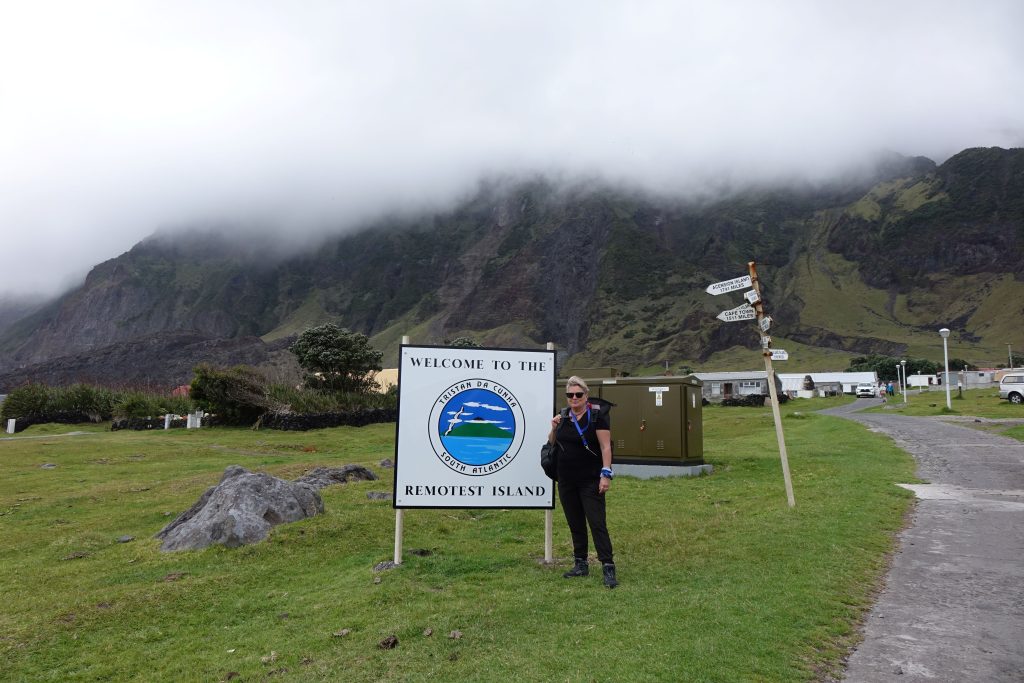
A couple of Tristan da Cunha signs can be found in The Settlement. This one has the seemingly obligatory arrows that tell you how far and in what direction places are. Being a British Overseas Territory, the distances are in miles.
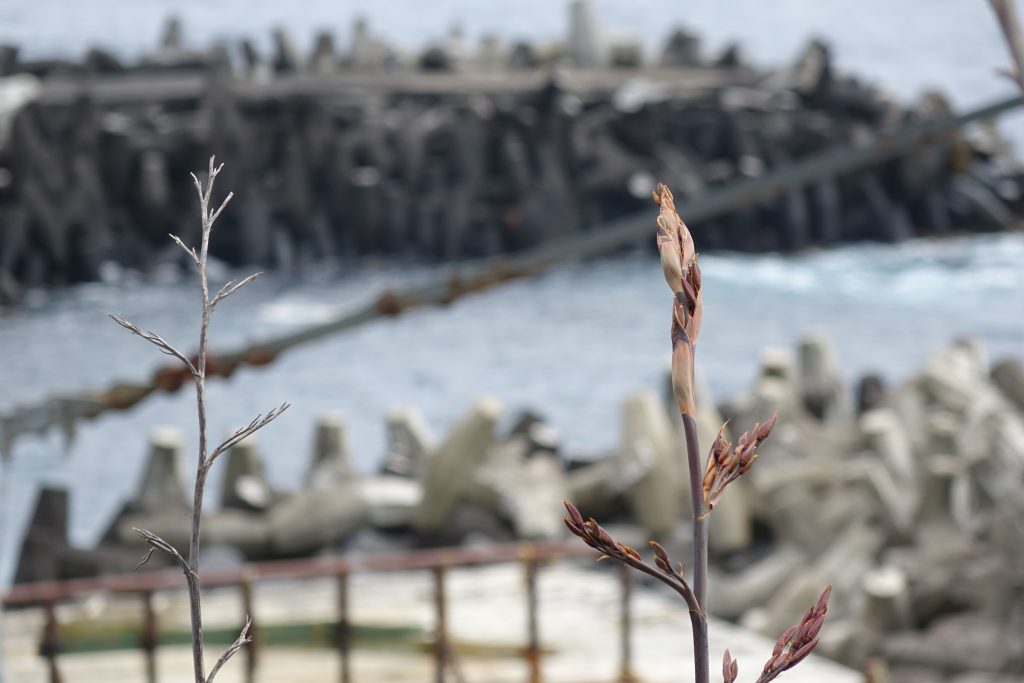
There was not a heap of flora around the settlement. I suppose whatever trees there might originally have been would have been cut down for firewood.
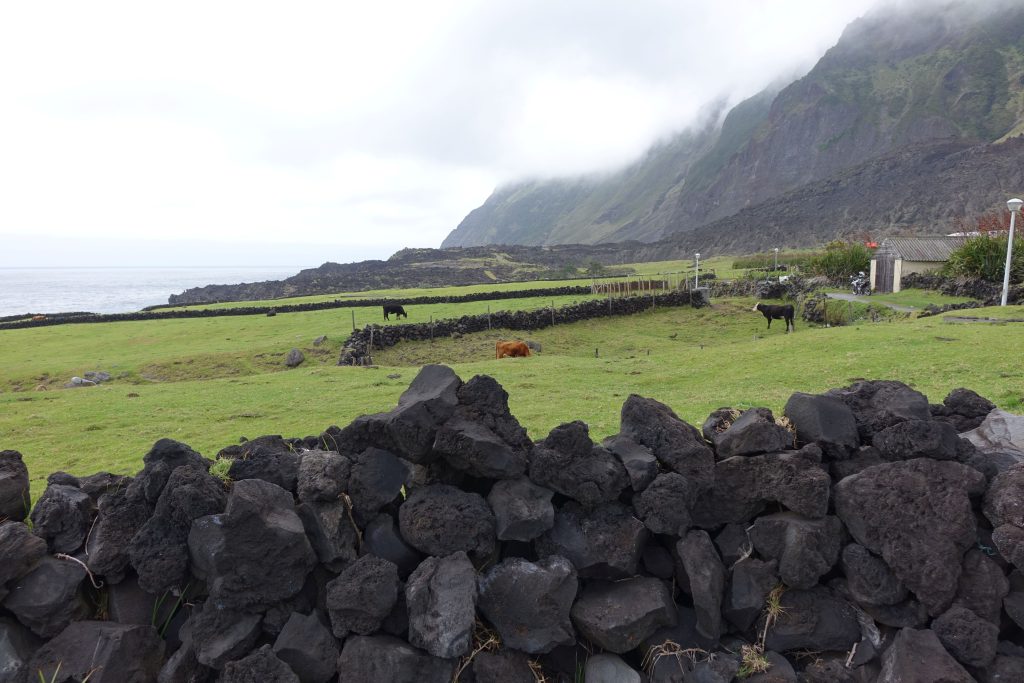
The fences are all hand made of volcanic rocks.
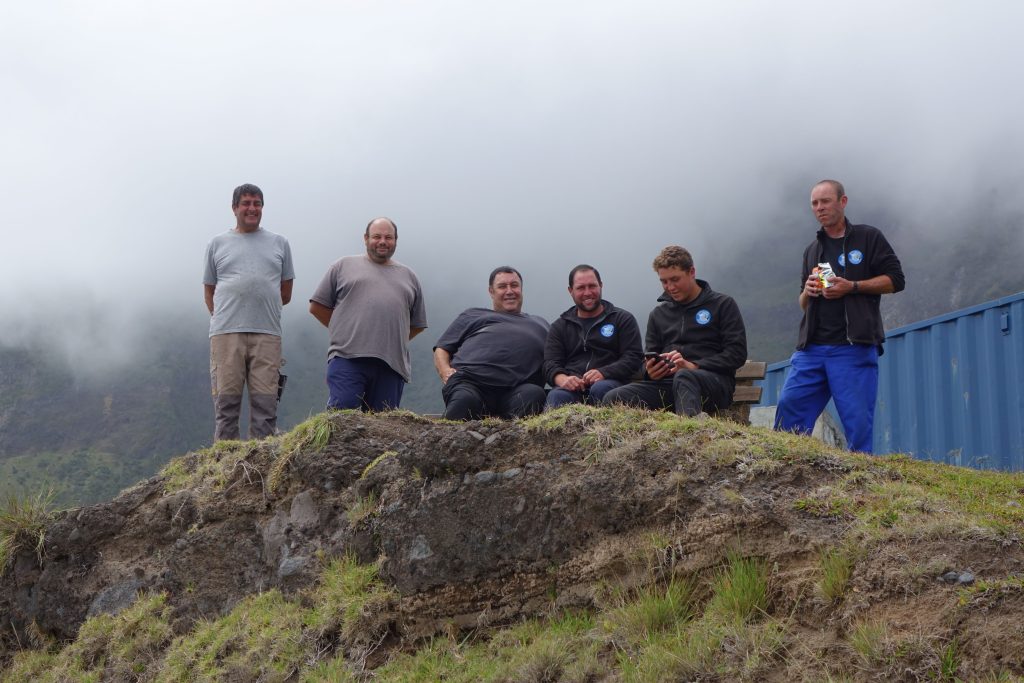
A group of workers taking smoko. They were happy enough for me to take their photo.
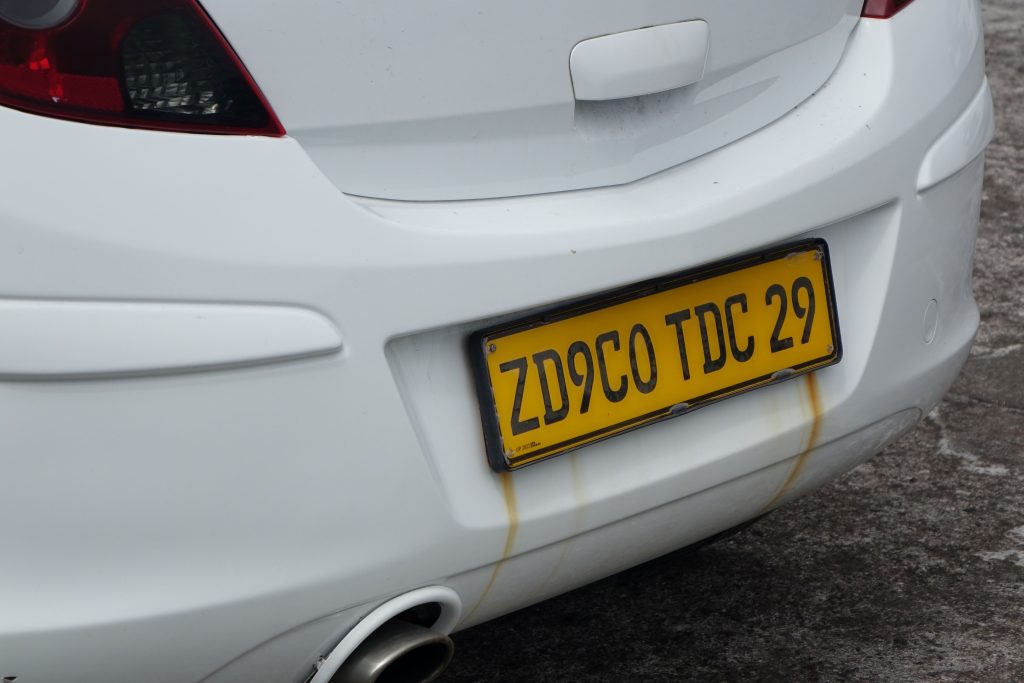
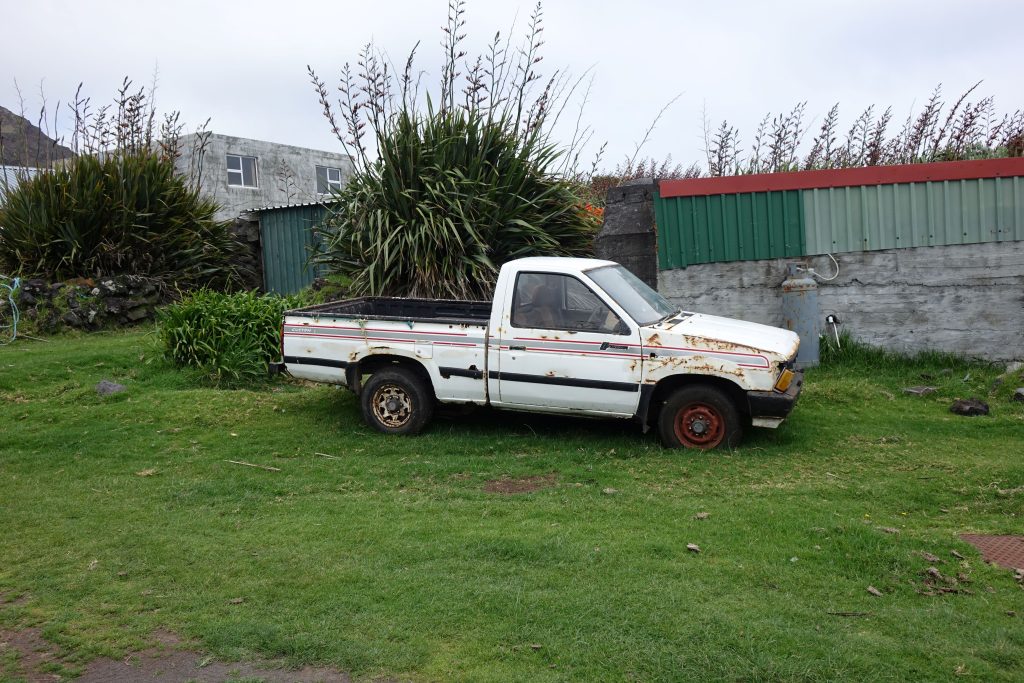
There are reputed to be, for some reason that escapes me, 125 cars on TdC. Each with their own TdC number plate. I mean, there’s only three miles of sealed road….And I’m not sure if the 125 included car carcasses of which there always seem to be a great many more on islands than mainlands.
My last installment on Tristan da Cunha should be posted tomorrow, just before we go ashore on the South Georgia Islands.
For my first post on Tristan da Cunha click here. For my second post on Tristan da Cunha click here.