
For the first post on this voyage click here. For the second post in this series click here.

At 37.1052° S, 12.2777 W, we are, literally, in the middle of the Southern Atlantic Ocean: after four and a half days by sea away from Cape Town, where we boarded.
As if to emphasise our remoteness, the ABC (yes, our ABC) television channel on my cabin TV is fading in and out. Up until now it has been a stalwart friend for the first leg of our voyage.
When visiting the most remote inhabited island the world, you might think time might not matter. That your visit might engender the feeling that time doesn’t exist. But it turns out while I was on the Tristan da Cunha, known as the remotest inhabited island on Earth, time was all – almost all – I thought about.

Along with the announcement that we can go ashore was the news that the hiking has been cancelled. There’s a storm coming and we need to be back on the ship well before it hits. Instead, local guides will show us their town. Okay, I’d been wondering if I would have enough time to do the three hour return hike to the island’s potato patches and see the town and meet some locals so the weather has made up my mind.

In the water beyond the ship’s side door, a black rubber Zodiac ducks and weaves like a boxer trying to avoid an opponent’s left hook. One by one, ten of us take one, two, three steps and plop onto the swollen sides of the vessel. I later hear that at least two people went tumbling while boarding. It didn’t stop them going ashore though.
Disembarking is even more dicey even though we’re tucked in between two rock walls. The swell surges up and down and you need to time your steps just right. Needing both hands, I couldn’t get a photo of that.

Our Expedition Leader gathers us round and announces we will have an hour on the island before we need to reboard the ship. One hour! I fear my disappointment radiates from me. But, I remind myself, at least I am here. I could be stuck on the ship gazing at Tristan da Cunha forlornly from the bow.
Wondering whether to join a group with a local guide or just go exploring on my own, I ask when the next group tour is leaving. The answer is after the next Zodiac has disembarked. That will eat too much into my single hour. I set off up the road that leads from the dock area to the town.
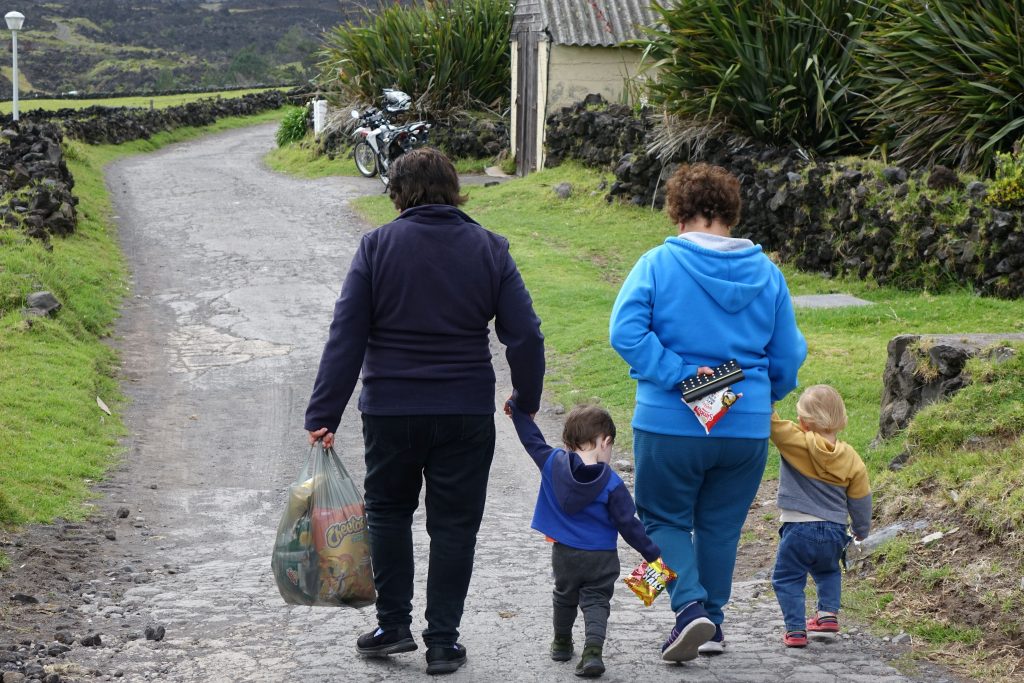
I pass two grandmothers holding hands with two toddlers. The group looks like they’ve been shopping for a kids’ party. Chips and lollies dangle from hands. We exchange greetings and I say I’m heading for the cemetery and they kindly point although, because I saw it from the ship, I have a pretty good idea where it is. Ahead of me by one hundred metres, on the far edge of town, I can see a guide leading a group of my shipmates.

St Mary’s School is a yellow weatherboard building that looks big enough to cater for double the twenty three or so students currently enrolled.
Ushuaia, at the southernmost point of Argentina, claims for itself the honour of being the End of the World. That’s where our voyage will end. But the island of Tristan da Cunha, claims the title of the remotest inhabited island on this Earth. It’s likely that St Mary’s is the most remote school on Earth.
TdC has an area of under one hundred square kilometres and an average of twelve-kilometre diameter and an Islander population, as of five days ago, of 222.
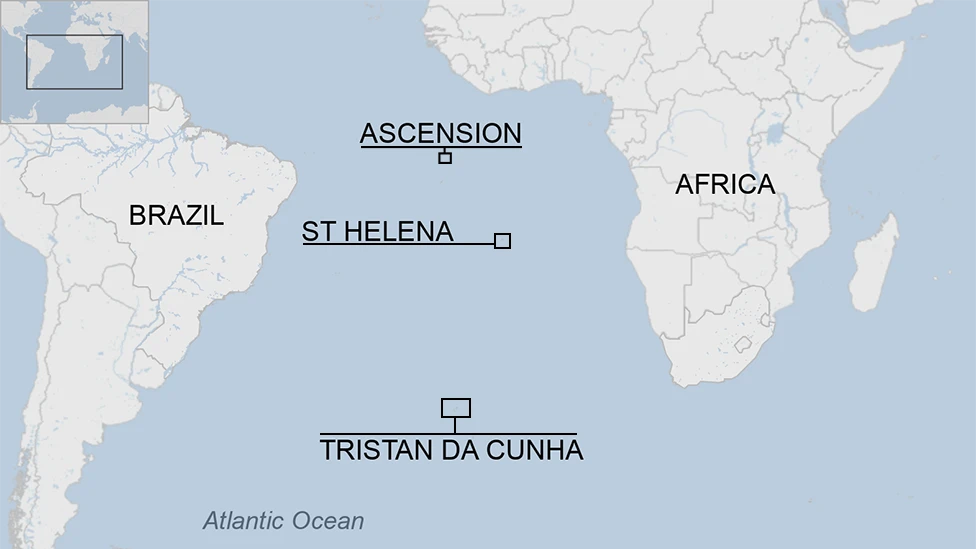
The island has fascinated me since I visited its sister islands, St Helena and Ascension, in 2017. Together the three form a single British Overseas Territory. With St Helena being more than 2,000 kms and Ascension some 3,7000 kms to the north of TdC, this is also, surely, the Earth’s most spread out territory.
I travelled to the other two islands in the months before the opening of the St Helena International Airport, when the only way you could get there was by five days on Britain’s last Royal Mail Ship. Yesterday I found my posts from that time are still here on this website. Check them out!
Meanwhile, my reports on this current adventure will continue tomorrow.
For the first post on this voyage click here. For the second post in this series click here.